Moving to Buenos Aires: Your First 30 Days Checklist
Plan your first month in Buenos Aires in useful stages: arrival, home essentials, regular routes and next decisions. Build a week you can enjoy.

Your first month in Buenos Aires does not need to become a race through every administrative task and neighborhood. Start with a dependable arrival, learn the small area around home and test the routines you will repeat. By the end of 30 days, the city can feel less like a list of unknowns and more like a place where you know how to begin your morning.
This checklist organizes decisions, not immigration or rental requirements. Your circumstances determine the documents and procedures you need. Confirm those with the relevant authority or provider rather than treating another newcomer's experience as a rule.
Before day one: arrange the first landing
Keep your address, arrival contact and check-in instructions available offline. Confirm the exact airport on your ticket and the route to the accommodation. The airport operator lists Ezeiza and Aeroparque as separate airports; an airport name is a practical detail to check, not shorthand for the same arrival point.
Ask how late arrivals and flight delays are handled. Record who will answer, what to do if you cannot get through and whether the accommodation is ready for the time you arrive. An early flight does not establish an early check-in.
If you are still choosing the first home, our guide to checking an apartment before booking from abroad covers the property, booking contact and written conditions. Resolve that choice before relying on the arrival arrangement in your first-month plan.
Organize the first essentials: payment methods, a charged phone, necessary travel documents and any personal arrangements that cannot wait. Keep sensitive information in a protected place and share only what the relevant provider needs. Leave ambitious city plans for a day when arrival tasks have stopped demanding your attention.
Days one to three: make the home usable
Check the apartment with the responsible person or follow the agreed arrival process. Note existing damage, missing items and any mismatch with the agreed description. Ask how to report a problem and keep the resulting communication with the booking information.
Test the things your routine depends on: access, hot water, cooking equipment and connection if you need it. Ask about rubbish disposal, laundry and building arrangements rather than inferring them from familiar practices at home. Resolve questions while the check-in details are still fresh.
Make a small first grocery shop. A simple breakfast and an easy meal let you rest without solving dinner from scratch each night. Choose one manageable outing nearby; a short walk can begin building a mental map without requiring an entire sightseeing itinerary.

Week one: learn your everyday circuit
Locate the destinations you will use regularly: work, campus, groceries, laundry or an activity. The city's interactive map can help you locate addresses and routes. Test important journeys at realistic hours; a line drawn on a map does not measure the experience of waiting, changing services or walking the final blocks.

Keep notes about what you learn rather than remembering every detail. Save an address, an opening time checked with the business and a route you have used. Mark anything uncertain so an early guess does not quietly become your routine.
If you are still comparing housing, explore apartments on BeTrusty with these regular journeys in mind. Confirm dates, occupants and property conditions for the options you consider. Your first week can improve your brief, but it does not guarantee an extension or a different home will be available.
Week two: organize the commitments that need follow-through
Make a personal task list for services, study or employer requirements. Give each item an owner, a source and a next action. For example, a university can tell you what its enrollment process requires; the accommodation provider can clarify access and household conditions. Keep those responsibilities separate.
Review costs using the currency and payment schedule in each actual agreement. Distinguish expenses from money temporarily tied up, and planning estimates from confirmed charges. If anything remains unclear, ask before making a larger commitment.
Do not let every unresolved question block the rest of the week. You can try a class, cook a favorite meal or learn a nearby route while an administrative answer is pending. A move becomes easier when ordinary pleasures develop alongside the tasks.
Week three: test whether the routine fits
Notice recurring friction. Are you rushing a commute, missing a meal or working in an uncomfortable corner? Choose a specific adjustment and see whether it helps. Changing all your habits at once makes it harder to know what improved.

Start one repeatable activity outside home. Use your interests and schedule to choose it rather than pursuing a generic idea of expatriate life. A class, a museum visit or a weekly walk can become an anchor that makes the city feel familiar.
Week four: decide what comes next
Before the review, gather four short notes so you can compare the month with your initial plan:
- A routine you now repeat comfortably, such as a grocery trip or workday.
- A recurring problem, with a concrete example of when it happens.
- An unanswered question and the person or institution that can answer it.
- Your next date-sensitive decision, including its confirmed deadline if one exists.
These notes keep the next month from becoming a second arrival project. They also make a conversation with a provider more useful: you can explain the change you need instead of requesting a vaguely better experience.
Review your accommodation dates, upcoming obligations and any decision deadline. If you want to change or extend housing, ask about availability and terms early. Keep the existing departure arrangement workable until the alternative is confirmed.
Write a shorter checklist for the next month: what works, what needs changing and what still needs an authoritative answer. The goal is a livable week with room for discovery. Compare Buenos Aires apartments on BeTrusty using what you now know, and confirm the details that will shape your next chapter.
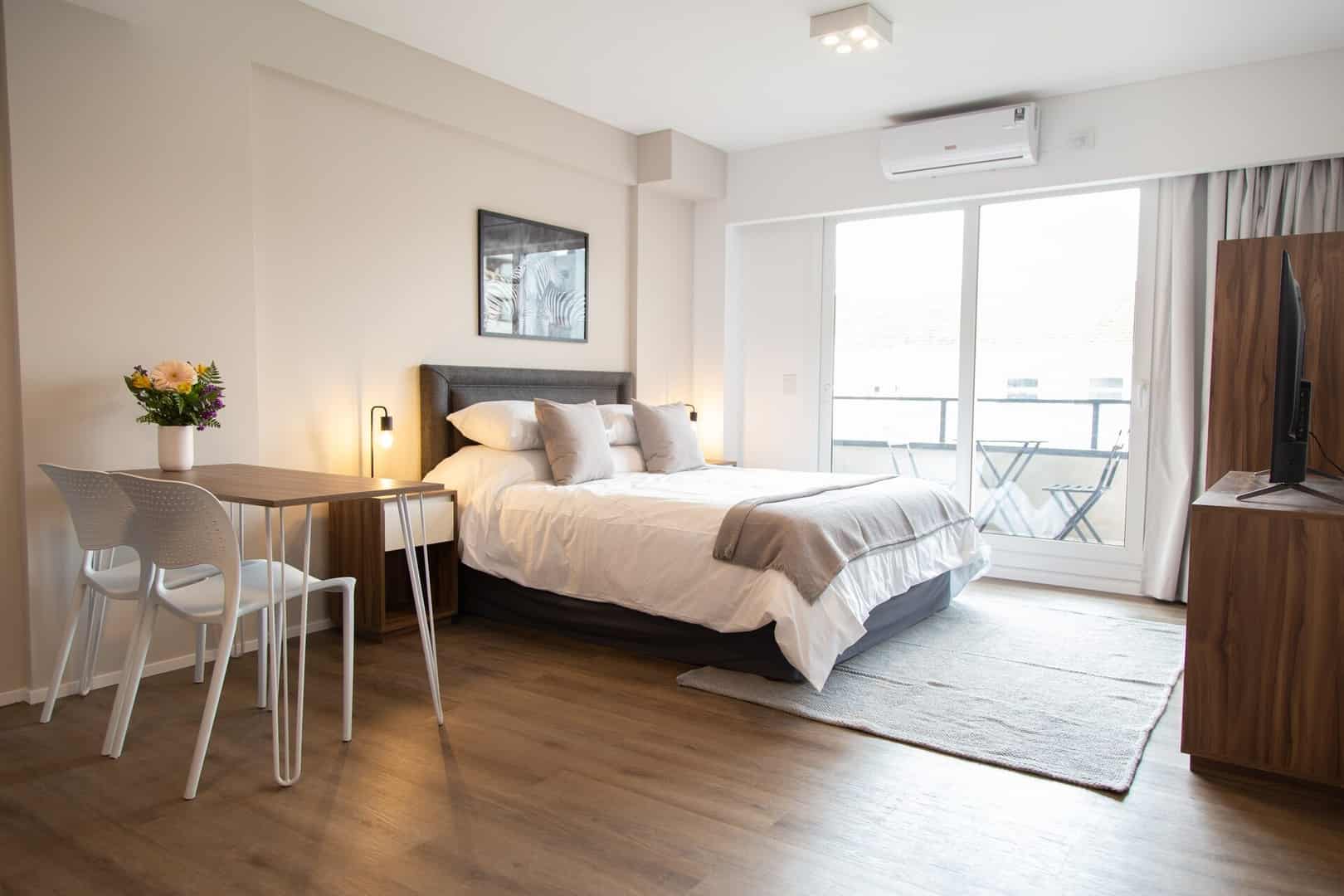
Photographs: original images of a selected BeTrusty apartment in Buenos Aires. They illustrate everyday routines and surroundings; they do not establish availability, connectivity or suitability for every need. Confirm the actual unit and conditions with the provider.
Sources and further information
- Ezeiza and Aeroparque as separate airports
aeropuertosargentina.com
Official reference consulted 29 September 2026. Check changing details with the responsible institution or provider.
- interactive map
mapa.buenosaires.gob.ar
Official reference consulted 29 September 2026. Check changing details with the responsible institution or provider.
- Original catalog photographs: Nuñez studio
BeTrusty property catalog
Human-selected property. Listing and exact image association checked 2 October 2026; availability, connectivity and work suitability are not inferred.